
Why Tight Alcove Walls Restrict the Swing of a 36 Bathroom Vanity Installation
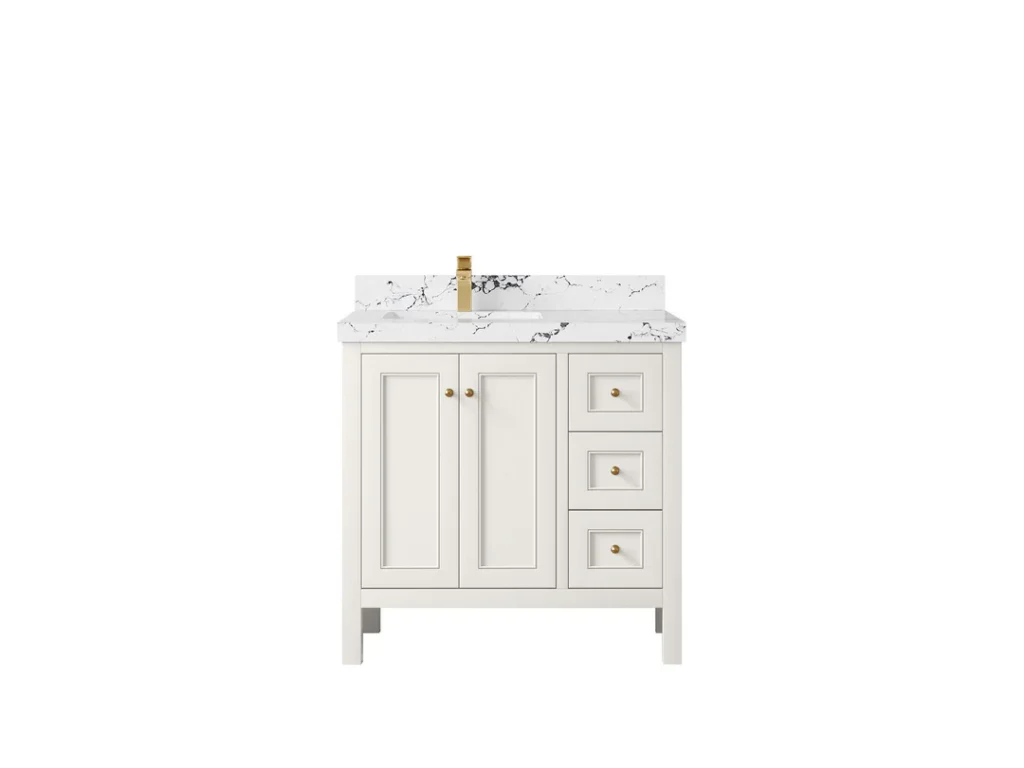
Many bathroom remodels run into the same frustrating problem. The vanity fits perfectly between two walls, yet the cabinet doors cannot open fully or the drawers stop halfway. The issue is rarely the vanity itself. It is the lack of operating clearance around it.
Alcove walls affect how comfortably you can use a vanity every day, not just whether it fits during installation. This guide explains why a 36 bathroom vanity can become difficult to use in a tight alcove, what causes the problem, and what to check before making your purchase.
Table of Content
- Why a Tight Alcove Changes How a 36 Bathroom Vanity Functions
- The Hidden Clearance Measurements Buyers Often Miss
- How Vanity Design Affects Door and Drawer Swing
- What to Check Before Buying a 36 Bathroom Vanity
- Conclusion
- FAQs
Why a Tight Alcove Changes How a 36 Bathroom Vanity Functions
Buying the right vanity is about more than matching the cabinet width to the available space. A comfortable installation also needs room for doors, drawers, and everyday movement.
It’s More Than Just Width
Installation space and operating space are two different measurements.
A vanity may physically fit inside an alcove, but cabinet doors, drawer slides, handles, and countertop overhangs all require additional clearance. Ignoring these dimensions can limit access to storage and make daily use frustrating.
Manufacturers provide overall dimensions, but homeowners should also consider how the vanity functions once it is installed.
Everyday Problems Homeowners Notice
Limited clearance quickly becomes noticeable during normal use.
Cabinet doors may strike the side wall before opening completely. Drawers can stop short because they hit nearby fixtures or trim. Reaching stored items becomes awkward and cleaning around the vanity becomes more difficult because tight gaps trap dust and moisture.
Small clearance issues often have a bigger impact on daily convenience than expected.

The Hidden Clearance Measurements Buyers Often Miss
Many installation problems begin because only the cabinet width is measured.
Measure Beyond the Vanity Cabinet
Successful installations require several measurements beyond the cabinet itself. Check:
- Side wall clearance.
- Front walking space.
- Door and drawer projection when fully open.
- Countertop overhang.
Each measurement affects how comfortably the vanity functions after installation rather than simply whether it fits into the opening.
Fixtures That Can Reduce Available Space
Nearby fixtures can reduce usable clearance even when the alcove measurements appear correct.
Bathroom doors, toilets, shower glass panels, baseboards, and decorative trim all occupy valuable space. These obstacles may interfere with cabinet doors or drawer operation if they are not considered during planning.
If you’re choosing a wood bathroom vanity, remember that protecting the finish is also important. Repeated contact between cabinet doors and surrounding walls can eventually damage painted surfaces, stain finishes, or decorative mouldings.
How Vanity Design Affects Door and Drawer Swing
The layout of the vanity plays a major role in how easily it functions inside a tight alcove. Two vanities with the same width can require very different amounts of clearance.
Not Every 36 Bathroom Vanity Opens the Same Way
Cabinet design affects both access and usability.
Full-overlay doors usually require more swing space than some inset designs. Shaker doors with projecting frames may need extra clearance compared with slab-style fronts. Drawer layouts also vary, with some extending farther than others depending on the slide mechanism.
Even hardware placement matters. Large handles or knobs can reduce the available opening angle when walls are close to the cabinet.
Features That Work Better in Tight Alcoves
Some design features make everyday use much easier in confined spaces.
Soft-close hinges help control door movement and reduce accidental impacts. Smaller door panels often require less swing clearance, while offset drawer layouts can improve access to storage. Open shelving eliminates door clearance altogether for frequently used items.
If you’re considering a small bathroom vanity with sink, these features can make a noticeable difference because compact bathrooms usually offer less room for doors and drawers to operate comfortably.
Floating vanity designs are another practical option. Raising the cabinet off the floor creates a greater sense of space and makes cleaning underneath much easier.
What to Check Before Buying a 36 Bathroom Vanity
A few extra measurements before purchasing can prevent costly installation problems later.
Create a Simple Installation Checklist
Before placing an order, make sure you:
- Measure the wall-to-wall opening.
- Measure usable side and front clearance.
- Confirm the plumbing location.
- Check the cabinet door swing direction.
- Review the manufacturer’s overall dimensions.
- Include the countertop overhang in your measurements.
Comparing these details before buying is far more reliable than choosing a vanity based only on its advertised width.
When Another Vanity Layout Makes More Sense
Sometimes the smartest decision is choosing a different layout instead of forcing a 36-inch vanity into a restricted space.
Wall-mounted vanities often improve movement because they create more visible floor area. Narrow-depth designs provide additional walking space, while offset sink layouts may work better around nearby fixtures. In some bathrooms, selecting a slightly smaller vanity delivers better everyday functionality than maximising cabinet width.
A bathroom should feel comfortable to use long after the installation is complete.
Conclusion
A successful vanity installation depends on more than fitting the cabinet between two walls. Door swing, drawer clearance, surrounding fixtures, and countertop dimensions all influence how practical the vanity will be every day. Taking time to review these details before buying helps avoid unnecessary frustration later.
Visit Vanity Showroom Atlanta to explore quality 36 bathroom vanity options with detailed specifications and expert guidance to help you choose the right fit for your space. Visit us today.
FAQs
Can a 36 bathroom vanity fit inside a 36-inch alcove?
Usually not. Most installations require additional clearance for the countertop, cabinet doors, drawers, and small installation tolerances.
How much space should cabinet doors have to open properly?
The required clearance depends on the vanity design, but always follow the manufacturer’s recommended operating dimensions rather than relying on cabinet width alone.
Are floating vanities better for tight bathroom layouts?
Yes. Floating designs often improve visual space, make cleaning easier and provide better movement in compact bathrooms while still offering practical storage.
Should I measure the countertop or the cabinet when buying a vanity?
Measure both. Countertop overhang can extend beyond the cabinet and affect the clearance needed for a successful installation.