
Is a 48-Inch Vanity Too Small? Expert Tips to Choose the Right Size
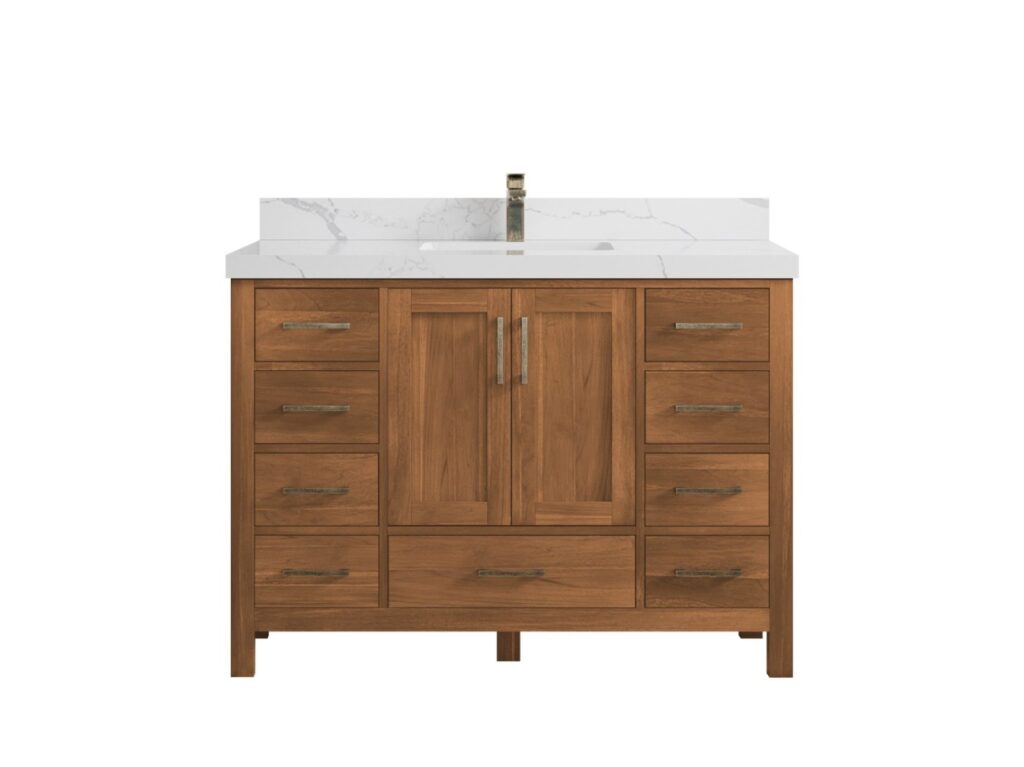
Is a 48-inch vanity the right fit or just an awkward in-between? Homeowners and designers ask this all the time. On paper, it looks like a solid choice: not too big, not too small. But once installed, it can feel very different.
Some people love the balance of the 48 inch double sink vanity. Others feel it leaves them wishing for a little extra counter space.
The truth depends on your bathroom’s layout, your daily routine, and how you like to move around while getting ready. Here’s why this size sparks so much discussion and how to make it work best.
What Makes a 48 Inch Double Sink Vanity Size So Debated?
Even though a 48 inch double sink vanity seems straightforward, it often divides opinion. The conversation usually comes down to space, proportion, and purpose.
Space:
In smaller bathrooms, a 48 inch double sink vanity can start to feel crowded once you account for mirrors, faucets, and other fixtures. That’s why many homeowners choose a single 48 inch vanity with sink instead. With one sink, the extra counter space feels more open, making the area easier to use and keeping it visually balanced.
Proportion:
In a narrow layout, a 48-inch vanity may look oversized, while in a medium or wide bathroom, it often feels just right. Proportion is key. Aligning the vanity with wall space, lighting, and mirrors makes a big difference in how comfortable the setup feels.
Purpose:
How you use the space matters as much as the size itself. For a single user, a single 48 inch vanity with sink is usually more practical.
For households with multiple people sharing the bathroom at the same time, two sinks might make sense. But that is only if the room has the clearance to accommodate them comfortably.
48 vs 36 vs 60 Inches: How Much Difference Does It Make?
Comparing vanity sizes side by side shows how a few inches can change comfort and functionality.
36 Inches vs 48 Inches:
A 36-inch vanity works well for compact bathrooms or powder rooms, but counter space and storage are limited. A 48-inch vanity gives extra surface area for toiletries, better drawer layouts, and more organized storage below. Choosing a single 48 inch vanity with sink often creates a comfortable balance, keeping the space open without losing functionality.
48 Inches vs 60 Inches:
A 60-inch vanity provides more storage and the option for two sinks, but it also takes up more wall space. In tighter bathrooms, it can feel visually heavy and limit movement. The 48 inch double sink vanity, on the other hand, keeps proportions balanced. It’s spacious enough to handle daily essentials and occasional shared use without dominating the room.
Where a 48-Inch Vanity Works Best
A 48 inch vanity can adapt to a range of layouts, but it’s most effective in certain setups.
Mid-Sized Bathrooms:
This is where the 48-inch vanity shines. It fills the wall nicely, allows for centered mirrors and wall lighting, and still leaves room to move around. For most single users or couples who don’t need two sinks, it feels balanced and functional.
Guest Bathrooms:
In secondary bathrooms, a 48-inch vanity provides a touch of luxury without crowding the room. It offers ample storage for towels and toiletries, giving guests plenty of counter space while keeping the look clean and organized.
How to Make a 48-Inch Vanity Work Without Feeling Cramped
Even with the right footprint, design choices determine how well a vanity functions.
- Shift the sink slightly. Off-center placement creates a natural workflow: one side for everyday items, the other for décor or extra storage. It improves usability without increasing size.
- Organize inside. Use drawer dividers, pull-out trays, or hidden compartments to keep essentials accessible. Thoughtful internal layouts make a single 48 inch vanity with sink feel more efficient than larger, less organized setups.
- Add vertical storage. Slim wall cabinets or narrow shelves above the 48-inch vanity keep items handy without cluttering the countertop. This is especially helpful in tighter bathrooms.
- Create zones. Designate one side of the counter for daily use and the other for less frequently used items. This keeps surfaces tidy and allows the bathroom vanity to feel more spacious.
How a 48-Inch Vanity Feels in the Room
A 48-inch vanity isn’t just about the measurement. It’s about how it interacts with its surroundings. Designers often consider visual balance to make a standard 48 inch double sink vanity feel proportional and intentional.
- Proportion over size. In medium bathrooms, a 48-inch vanity aligns well with walls, mirrors, and lighting. In very wide or long bathrooms, it can appear smaller unless paired with complementary elements like accent walls or furniture.
- Details matter. Slim edges, balanced drawer layouts, and subtle hardware make the 48-inch vanity appear lighter. Thick edges or oversized handles can make the same vanity feel heavier and dominate the space.
- Flow and spacing. Clearance around the vanity, doors, and nearby fixtures is just as important as width. A 48-inch vanity that has room to “breathe” instantly feels more comfortable and functional.
- Context counts. Surrounding finishes, flooring, and even small décor choices affect perception. By considering these factors, a vanity can feel intentional, spacious, and harmonious in almost any mid-sized bathroom.
Bottom Line
A 48-inch vanity is rarely too small for most bathrooms. Its footprint balances storage, counter space, and room to move. By paying attention to proportion, design details, and layout, both homeowners and designers can create a bathroom that feels open, functional, and visually balanced.
If you’re exploring options, consider a single 48 inch vanity with sink for more counter flexibility, or a 48 inch double sink vanity for shared bathrooms that can accommodate multiple users comfortably. With thoughtful planning, this size can deliver both efficiency and style.
Ready to see 48-inch vanities in person? Visit our Vanity Showroom Atlanta to find designs that fit your space and style perfectly.