
Why Designers Prefer Floating 30-Inch Vanities in Powder Rooms
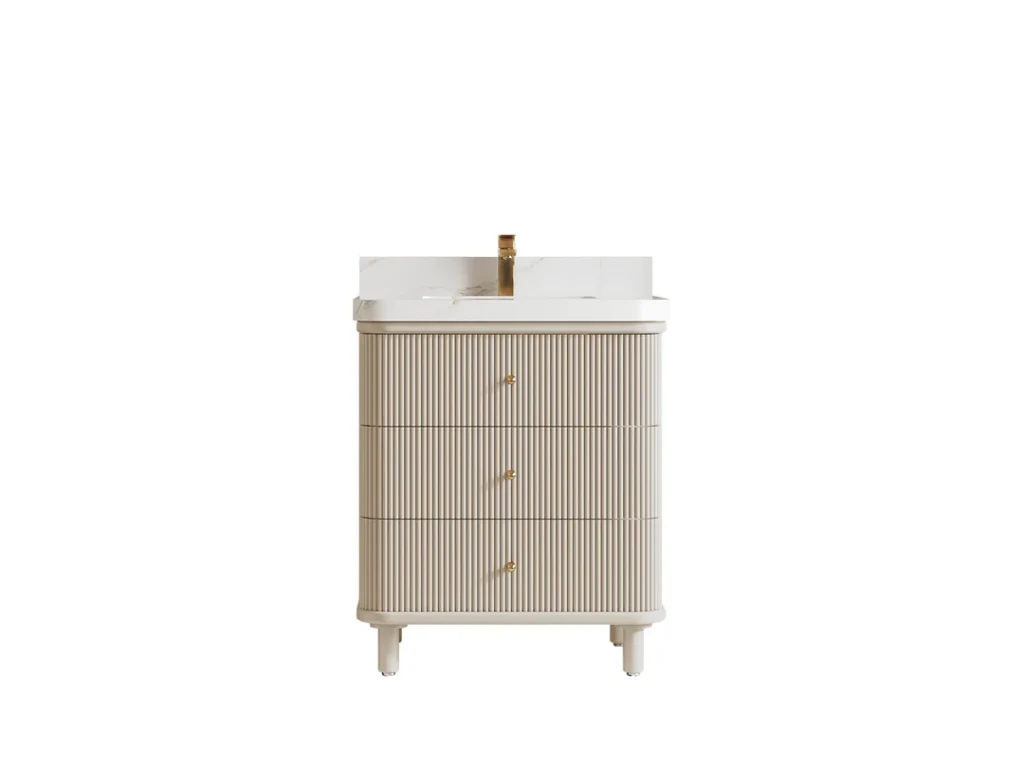
You can stand in a powder room and not immediately spot anything wrong but still feel like something isn’t working. The mirror’s in place, the tiles are clean, the fittings look decent. Yet the space feels tighter than it should, especially when you actually use it.
Most people assume it’s a layout issue. Maybe the room is just small. Maybe the lighting isn’t right. So they adjust around it, brighter lights, lighter colours, a different mirror. What often gets missed is the one element that quietly controls how the space behaves: the vanity.
Once you start looking into a 30 inch bathroom vanity, you realise the size alone doesn’t solve the problem. Two vanities can be the same width and still make the room feel completely different. That’s where the floating design starts to come into the conversation, not as a style choice, but as a spatial one.
Table of Contents
- Why a 30-Inch Vanity Works So Well in Powder Rooms
- What Floating Actually Changes (Beyond Just Looks)
- What Most People Don’t Realise Until After Installation
- Before You Finalize One
- Final Thought
- FAQs
Why a 30-Inch Vanity Works So Well in Powder Rooms
There’s a reason 30 inches keeps coming up in smaller bathrooms. It sits in a range that works without forcing compromises.
Enough space to use comfortably without crowding
You’re not squeezing into a narrow basin, but you’re also not giving up walking space. In most powder rooms, 30 inch bathroom vanity fits without interfering with door swings or movement.
More about balance than design preference
People searching for the best 30 inch vanity are usually trying to solve a layout issue. It’s less about finishes and more about getting that middle ground right.
Flexible enough for awkward layouts
Whether it sits along a full wall or in a tighter corner, 30 inches adapts without forcing changes elsewhere in the room.
That said, size only gets you halfway there
A standard floor-mounted unit at this width can still feel heavier than expected, especially in compact spaces. That’s where the design approach starts to matter more than the dimensions.

What Floating Actually Changes (Beyond Just Looks)
The first shift is subtle. When you install a 30 inch bathroom vanity, you’ll notice more floor area. In a small powder room, that alone changes how confined the space feels when you walk in.
A floor-mounted vanity adds visual weight because it sits fully on the ground. A floating one removes that base contact, so the unit feels lighter without changing its size or function.
Movement also feels less interrupted. Instead of a solid block anchoring the layout, the space reads more open and continuous.
This is why designers often choose floating styles when working with a 30 inch bathroom vanity. The focus isn’t appearance, it’s how the space behaves in use.
In most powder rooms, a single sink bathroom vanity set is enough. The priority is usability in a compact space, not storage capacity.
What Most People Don’t Realise Until After Installation
This is where things get more practical. Floating vanities do reduce storage. There’s no base cabinet touching the floor, which means less internal space. In a powder room, that’s usually manageable. In a high-use bathroom, it can become frustrating.
Wall strength matters more than people expect. Not every wall is ready to support a mounted unit, especially with a heavy countertop. This isn’t always obvious until installation begins.
Height is another detail that gets overlooked. Too high, and it feels awkward to use. Too low, and you lose the visual benefit of the floating effect. And then there’s plumbing. Concealing it properly takes planning. If it’s exposed poorly, it can take away from the clean look people are aiming for.
This is also why not every option labelled as the best 30 inch vanity is actually right for a floating setup. The structure behind the wall matters just as much as the unit itself.
Before You Finalize One
A few simple checks can save you from choosing something that looks right but doesn’t work in your space.
- Make sure the wall can support the weight. Floating vanities depend completely on proper wall strength.
- Check your plumbing position. It should line up cleanly with the unit without forcing awkward adjustments.
- Look at the clearance around it. Even a well-sized 30 inch bathroom vanity can feel cramped if the space isn’t planned properly.
- Pay attention to how it behaves in real light. Photos rarely show depth, finish, or scale accurately.
- If possible, see it in person. Standing in front of it gives a much clearer sense of proportion than any image.

Final Thought
A floating vanity isn’t really a style decision. It’s a spatial one. It changes how a powder room feels the moment you step into it, especially when everything else in the room already works but the space still feels a bit tight or visually heavy.
If that’s the issue, a 30 inch bathroom vanity in a floating setup often solves what paint, lighting, or fittings can’t. It doesn’t add more to the room it removes visual weight and makes the layout feel easier to live with.
If that isn’t the problem, then there’s no need to force it. Not every space needs the same solution.
If you’re unsure, it helps to see it in person. At our store, Vanity Showroom Atlanta, you can compare different setups and understand what actually fits your space before making a decision.
FAQs
Is a 30 inch bathroom vanity enough for a powder room?
Yes. For a powder room, it’s usually more than enough. You get comfortable usage without taking up unnecessary space.
Are floating vanities harder to install?
They require proper wall support and more precise installation, but they’re not complicated when planned correctly.
Do floating vanities reduce storage?
They do. You lose some cabinet space, but in a powder room, that trade-off is often intentional.
What is included in a single sink bathroom vanity set?
Typically the cabinet and sink, sometimes the countertop and basic hardware. It depends on the supplier.
How do I choose the best 30 inch vanity for my space?
Start with your layout and how the room feels in use. The right choice depends more on space behaviour than design preference.