
Materials Varieties for Small Bathroom Vanity with Sink
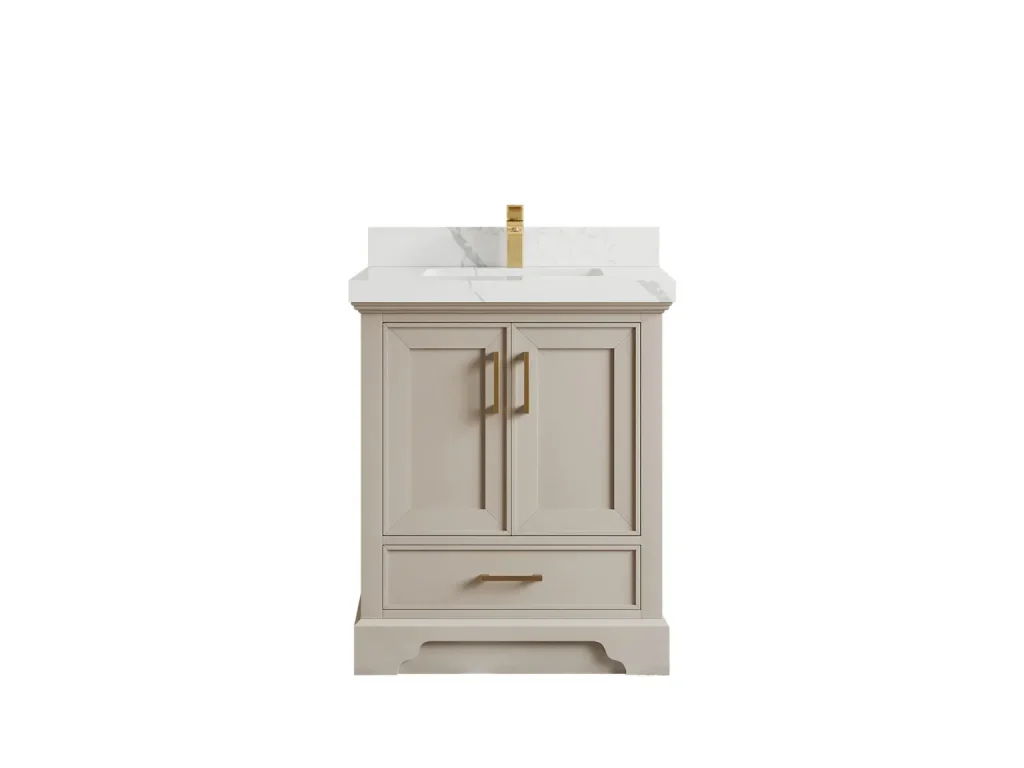
When you’re dealing with a small bathroom, there’s zero room for mistakes. One wrong vanity choice and suddenly you’re stuck with warped drawers, peeling finishes, or a piece that looks oversized for the space.
Plus here’s the thing: the smaller the room, the bigger the mess. Water splashes hit the vanity more often, cleaning products end up on every surface, and everyday wear shows faster.
That’s why picking the right material for a small bathroom vanity with sink isn’t just for style; it’s also for survival. This guide will walk you through the materials that can actually handle the chaos.
Materials That Suite Smaller Vanities Like 24, 30, or 36 bathroom vanity
Solid Wood: Strong but Demanding
Let’s start with the classic. Solid oak, maple, and birch vanities feel more like furniture than fixtures. These wood vanities bring a natural warmth to a bathroom, especially when their natural grain is highlighted.
If you’ve ever run your hand along a real wood cabinet, you know the difference instantly. Many homeowners choose it for 30 bathroom vanity or 36 bathroom vanity models to make the grain and texture a design feature.
The upside:
- Lasts decades if properly sealed
- Can be sanded and refinished if scratched
- Always looks timeless
The trade-off:
- High price point compared to engineered materials
- Susceptible to swelling if the finish wears down
Solid wood is for people who don’t mind giving a little care back. Sealing it now and then and wiping up splashes right away, for example. Think of it as owning a classic car, it turns heads, but you can’t just leave it in the rain.
Plywood: The Reliable Middle Ground
Not everyone wants the cost (or maintenance) of solid wood, which is where plywood comes in. Built from stacked wood layers, plywood is strong, holds screws firmly, and resists warping in a small bathroom vanity with sink.
We’ve seen families choose plywood when upgrading from a 24 inch bathroom vanity to a 30 bathroom vanity. Because they knew they’ll need something that can take daily wear without giving up after a few years.
Why it’s a smart pick:
- More durable than MDF or particleboard
- Handles moisture reasonably well
- Costs less than solid hardwood
Downside:
- Not as glamorous or “luxury” looking as solid wood
Plywood is basically the workhorse of vanity bases. It may not get compliments, but it quietly does its job, and does it well.
MDF: Smooth and Stylish (With Limits)
Medium-Density Fiberboard (MDF) is the sleek modern cousin of plywood. It’s smooth and uniform. And it is perfect for painted finishes. That’s why so many powder rooms feature white or navy vanities made of MDF. Because the major USP of MDF is that its finish looks flawless.
Good when:
- You want a crisp, painted look
- The bathroom is low-moisture (like a half-bath)
Not good when:
- The space is hot, steamy, and splash-heavy
In a guest bathroom where it won’t be stressed daily, MDF is a budget-friendly way to get style without splurging.
Laminate: Practical, Easy, and Underrated
Laminate doesn’t get enough appreciation though. But it is cost-effective and available in endless patterns. Above all, laminates are super easy to clean. If you need something functional for a rental or guest bath, you can certainly go for this option.
For example, a 24 inch bathroom vanity in laminate can give you a quick style update without draining your budget.
Strengths:
- Wipes clean with no fuss
- Resistant to stains
- Can mimic wood or stone affordably
Of course, laminate isn’t heirloom material for a small bathroom vanity with sink. It won’t last decades, and it won’t trick design purists. But if your goal is easy care in a small space, laminate is one of the lowest-maintenance choices.
Countertops: Where the Real Battle Happens
The base matters, but the countertop sees the most chaos like water, toothpaste, hair dye, soap and what not. This is where picking the wrong material can cost you quickly.
Quartz
- Non-porous and nearly indestructible
- Handles spills, stains, and scratches
- Ideal for family bathrooms
Granite
- Natural stone with unique patterns
- Strong but needs periodic sealing
- Perfect if you like one-of-a-kind design
Marble
- Elegant, cool to the touch, and stunning
- Easily etched or stained (toothpaste and red wine are the usual culprits)
- Best in low-use or showcase bathrooms
For long-term durability, you can invest in a 36 bathroom vanity with a quartz top. It is a combination that’s hard to beat because of its balance of luxury and practicality.
The Sink – Small but Critical
Most homeowners forget the sink when thinking about materials for their small bathroom vanity with sink. Yet it’s one of the most handled surfaces in the bathroom. Porcelain and ceramic are the classics. They’re glossy and resistant to scratches. Moreover, they stay bright for years, which is why most small vanities pair with them.
In case you’re tempted by glass or stone sinks, think ahead about the upkeep. For example, glass shows every water spot and stone needs sealing. In a small bathroom, that’s often more bother than it’s worth.
Quick FAQs
1. What’s the best material for a small bathroom vanity that won’t warp?
Plywood or solid wood are the top choices for the base. Pair them with a quartz countertop and a porcelain sink, and you get a vanity that handles water and daily use without warping.
2. Which vanity material is easiest to clean and maintain?
Laminate or quartz surfaces are the easiest. Wipe spills and splashes quickly, and they’ll keep looking new for years without much effort.
3. Does a small bathroom vanity with sink need a water-resistant finish?
Absolutely. Small bathrooms get more splashes because of their size. Sealed wood, plywood with veneer, or laminate prevents water damage and extends the life of your vanity.
Final Word
In a small bathroom, every splash and spill and scrub is magnified. So the materials you choose for your small bathroom vanity with sink matter more than ever. From solid wood to plywood, MDF, or laminate, each has its strengths and each works best in the right situation.
The takeaway? Think about how you actually use your bathroom, how much maintenance you’re willing to do. Invest wisely, and your vanity won’t just fill a space, it will make your bathroom feel complete, and even a little special.
Want to see these materials up close before deciding? Stop by our Vanity Showroom in Atlanta. Test and find the perfect small bathroom vanity that works for your space and lifestyle.